Tyres by vehicle type
SUV tyres: matching load, terrain and comfort for UAE SUVs
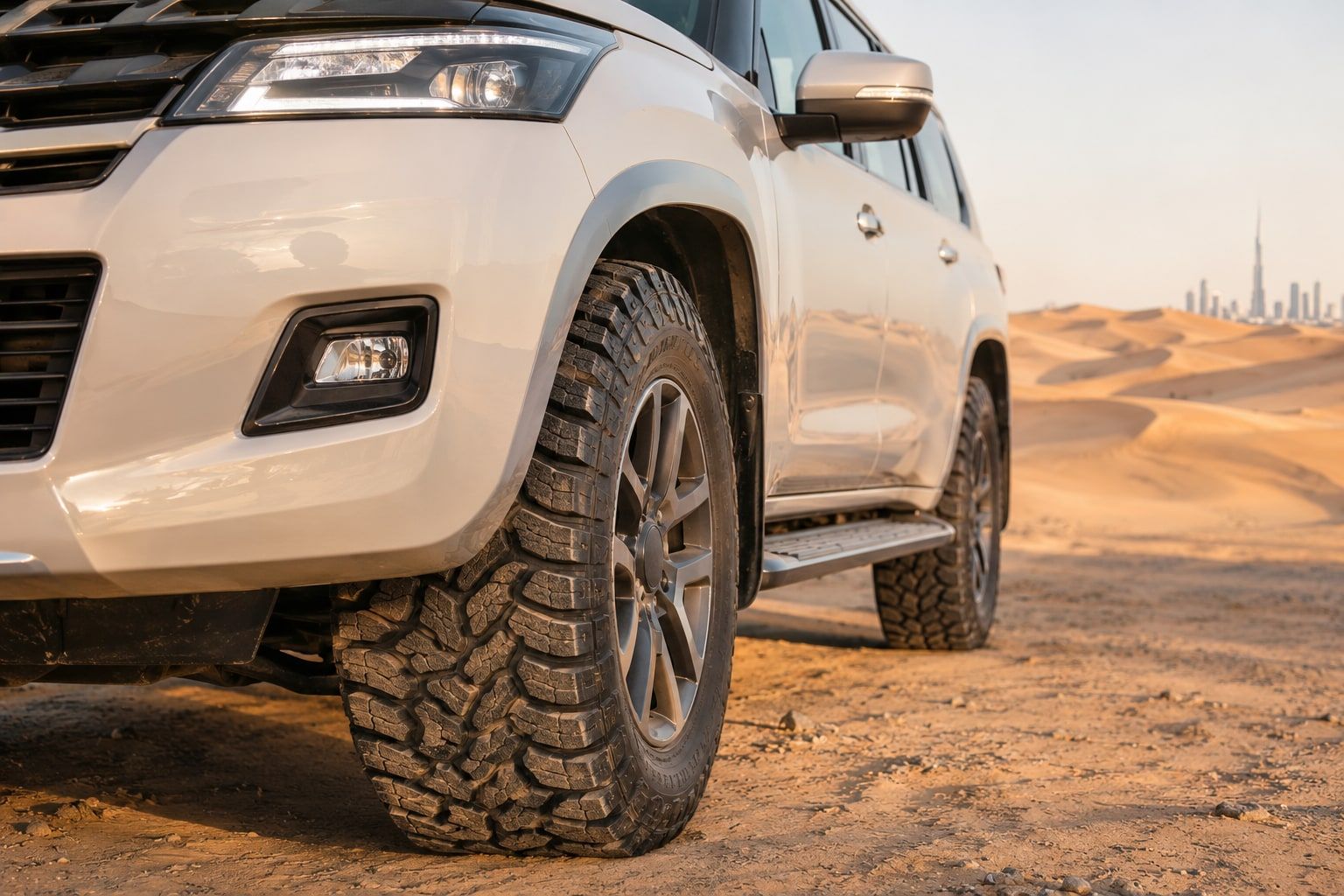
The right SUV tyres start with the load index and size on the placard, then match how you use the car: highway-terrain (H/T) for mostly tarmac, all-terrain (A/T) for regular sand and gravel, and a performance SUV tyre for fast luxury models. Weight is what sets SUVs apart, so never fit a tyre with a lower load index than the maker specifies.
A loaded Patrol or Tahoe can carry seven people, luggage and a roof box across the E11 in 45°C heat. That combination of mass, speed and temperature is why load rating and correct pressure matter more on an SUV than on any car.
Common examples on UAE roads: Toyota Land Cruiser, Nissan Patrol, Toyota Prado, Chevrolet Tahoe, GMC Yukon, Mitsubishi Pajero, Toyota Fortuner, Lexus LX
What decides the right tyre
| Factor | Why it matters for this vehicle |
|---|---|
| Load | Heavy SUVs often need load indexes above 110. Pirelli’s chart puts 112 at 1,120 kg and 116 at 1,250 kg per tyre, so a lower index is a real reduction in capacity. |
| Vehicle weight | A high, heavy body leans harder in corners and stresses sidewalls. Stiffer SUV constructions and the right pressure keep it stable. |
| Terrain | Road-only SUVs suit H/T; weekend dune and wadi trips suit A/T. The choice changes noise, wear and off-road safety. |
| Road noise | Large tyres move more air. H/T patterns are usually the quietest SUV choice, while aggressive A/T treads hum on the motorway. |
| Ride comfort | Big sidewalls already absorb bumps; upgrading to 22-inch rims trades that comfort for looks and raises fitted cost. |
| Driving conditions | Extreme summer heat and long, fast runs build tyre temperature. Correct load rating and placard pressure are the defence. |
Which SUV tyre type fits the way you drive?
| How you drive | Tyre type | Why |
|---|---|---|
| City and motorway only | Highway-terrain | Quietest, longest-wearing |
| Sand or gravel most weekends | All-terrain | Traction and tough sidewalls |
| Fast luxury SUV | Performance | Grip at high speed |
| Rock crawling, built 4x4 | Mud-terrain | Maximum off-road bite |
Most owners land on H/T or A/T. The article on H/T vs A/T tyres explains where the line falls for typical UAE use.
What does XL or a higher load index mean on an SUV tyre?
XL (extra load) marks a tyre built to carry more than the standard version of the same size, as Michelin explains. On a heavy SUV the maker may specify XL or a particular index, and replacements must meet it.
Load and pressure go together
An XL tyre only delivers its rated load at the correct pressure. Many SUV placards list a higher laden pressure for a full car; Michelin notes that some door stickers give both figures.
Our guide to load index and speed rating has the full chart.
Finding the right size for your SUV
SUV sizes vary by generation and trim, so start from the sidewall or use the tyres by car finder. Popular SUV sizes on our tyre size pages include 265/65 R17 and 275/55 R20.
Full-time 4WD SUVs need four matching tyres. See replacing tyres on AWD and 4x4 cars, then book tyre replacement.
Send your SUV and tyre size for a quote
Questions
Questions drivers ask
What are the best SUV tyres for the UAE?
There is no single best tyre; it depends on load, terrain and comfort priorities. For mostly road use an H/T pattern with the correct load index is the usual answer, and A/T suits frequent desert driving.
Can I fit car tyres to an SUV?
Only if the size, load index and speed rating match the placard. Many large SUVs need load ratings that ordinary car patterns do not offer.
Why do my SUV tyres wear on the edges?
Edge wear on both shoulders usually points to under-inflation, which is common on heavy SUVs. Check pressures cold and look at the uneven wear guide.
Do SUV tyres cost more to fit?
Larger rims, higher load ratings and heavier wheels usually raise the fitted cost. Send the size and we quote the options.
Sources