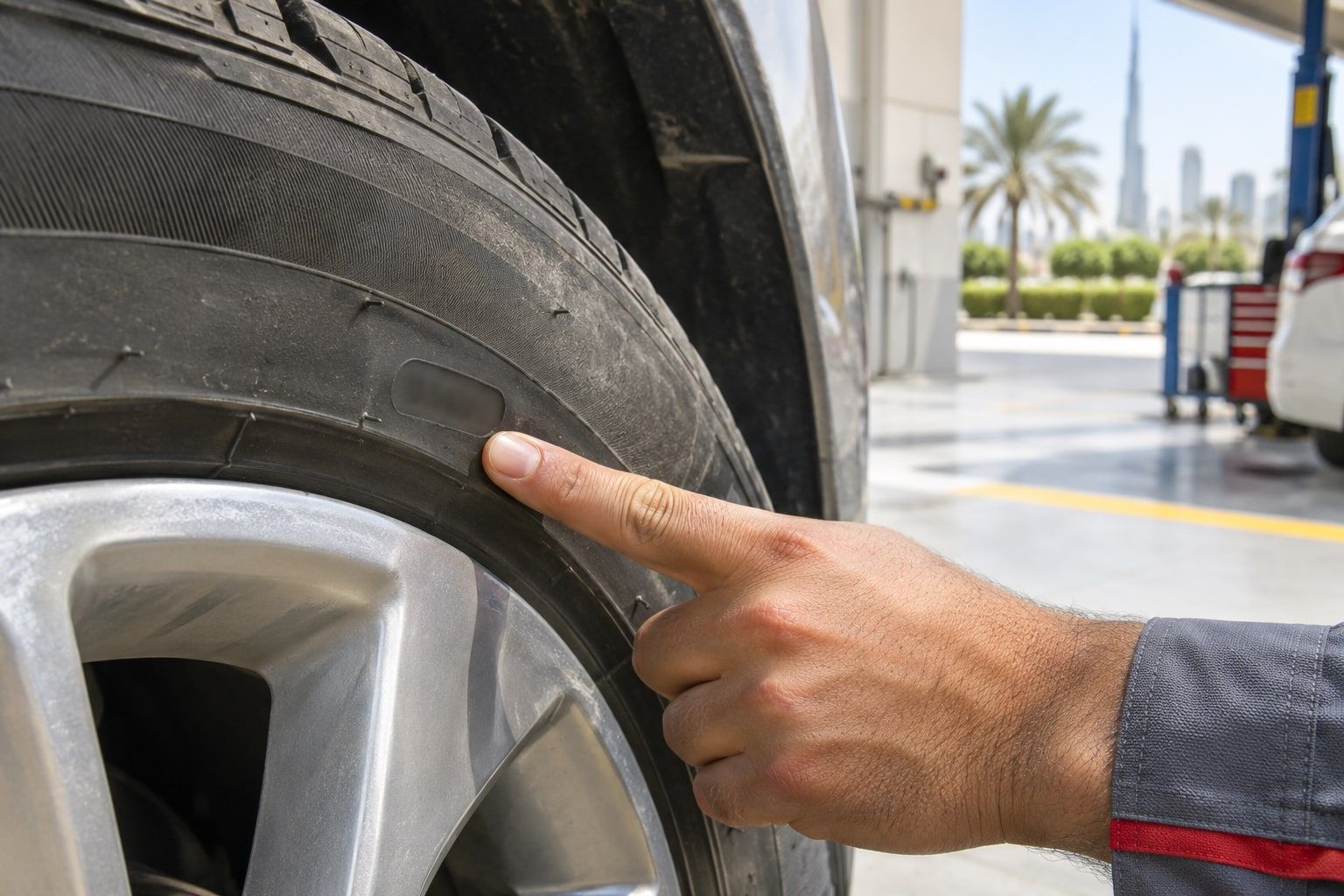
Any cut, puncture or tear that goes into a tyre’s sidewall means replacing the tyre, because the sidewall flexes constantly and cannot hold a lasting repair. A light scuff from kerbing that only marks the outer skin is often cosmetic. If you can see threads or fabric in the cut, the tyre is finished.
Sidewall damage is common in the UAE because of tight basement ramps, high kerbs at fuel stations and sharp rock on weekend off-road trips. The useful question is how deep the mark goes, and that is easier to answer with the right picture of what sits under the rubber.
Which parts of the sidewall matter most?
The sidewall runs from the shoulder, where the tread ends, down to the bead that seals against the rim. Under a few millimetres of rubber are the casing cords that carry the car’s weight, which is why a cut deep enough to reach them is a replacement.
Damage near the bead deserves extra care: a split there can let the tyre unseat or leak. The same face carries the size and DOT code, explained in the tyre size guide.
What should you look for along the sidewall?
| What you see | What it usually means | Next step |
|---|---|---|
| Shiny rub line, no rubber missing | Light kerb contact | Keep an eye on it |
| Gouge with rubber missing | Cut into the outer layer | Inspection |
| Threads or fabric visible | Cords exposed | Replace |
| Split near the rim | Bead area damaged | Replace |
| Screw or nail through the wall | Not repairable | Replace |
| Lump beside a scrape | Broken cords | Replace now |
Run a fingertip gently over the mark with the car parked. A gouge you can catch a nail in is worth showing a technician, even if no cords are visible.
Is it safe to drive with a cut in the sidewall?
A cut that reaches the cords is not safe for normal driving, so fit the spare and keep speed low. A purely cosmetic scuff is safe, but you need a close look in good light to be sure which you have.
Treat these as unsafe
visible cords, a split near the rim, a bulge next to the damage, or a tyre that loses air after the scrape. If you are stuck, book flat tyre assistance rather than driving on it.
When should a professional inspect the sidewall?
Get it checked if
rubber is missing, the mark is longer than a fingernail, it sits close to the rim, or you hit the kerb hard enough to feel it through the steering.
Michelin’s Middle East page describes one narrow exception for very small sidewall holes on lower speed-rated tyres, while its US guidance rules sidewall repairs out altogether. In practice, treat any sidewall injury as a replacement unless a technician who has had the tyre off the rim says otherwise.
What should replace a tyre with sidewall damage?
Match the size, load index and speed rating on the old tyre, and ideally the same model if the other tyre on the axle is in good condition. If sidewall cuts keep happening on rocky desert tracks, it may be worth comparing all-terrain tyres for your size with what you run now.
You can find options through tyres by size, and the tyre replacement page explains what to confirm before ordering. If the rim was scraped in the same incident, a rim repair can be done at the workshop while the tyre is off.
Send a close photo of the sidewall mark and the size and we will tell you whether it needs replacing.
Questions
Questions drivers ask
Can a sidewall puncture be plugged?
No. Michelin’s guidance is that sidewall punctures and cuts need a new tyre, because the area flexes too much for a plug or patch to stay sealed.
Is a scraped sidewall from kerbing a problem?
A shallow rub with no rubber missing is usually cosmetic. A gouge, missing chunk or anything showing fabric needs an inspection or a replacement.
Does the shoulder count as sidewall?
It is treated the same way for repairs. Michelin’s Middle East guidance says shoulder punctures cannot be repaired.
Sources