The tyre type decides how a car feels day to day, so pick it on how you actually drive rather than how you might: touring tyres favour comfort and tread life, performance tyres favour grip, and all-terrain tyres trade road noise for sand and gravel ability. Each guide below explains what a type is good at and what it gives up.
- Touring tyresComfort-first road tyres for sedans and family cars that spend most of their life in traffic and on motorways.
- Performance tyresGrippy, responsive tyres for sports saloons, coupes and powerful SUVs, with firmer rides and faster wear.
- Highway-terrain (H/T) tyresQuiet, long-wearing SUV and pickup tyres for owners who stay on tarmac and graded tracks.
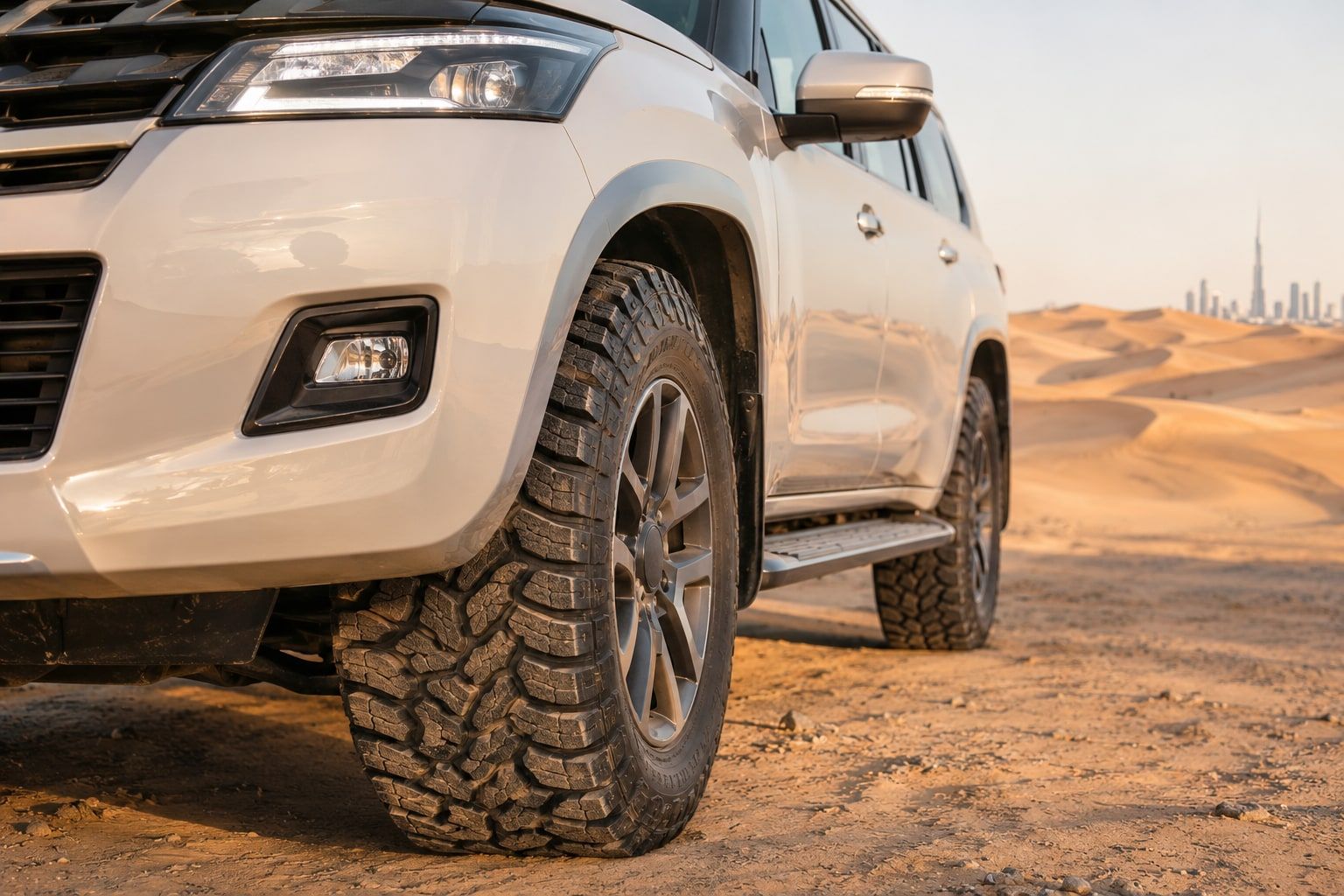
- All-terrain (A/T) tyresDual-purpose SUV and pickup tyres for owners who split their time between tarmac and desert or gravel.
- Mud-terrain (M/T) tyresAggressive off-road tyres for built 4x4s; loud and fast-wearing on tarmac, unmatched on rock and mud.
- Run-flat tyresSelf-supporting tyres that keep you moving after a puncture; what replacement involves and whether to switch.
- EV-specific tyresTyres built for the weight, torque and quiet cabins of electric cars, from Tesla to BYD and MG.
How do the main tyre types trade off against each other?
No type wins on everything. Touring tyres suit most commuters, performance tyres suit cars on low-profile wheels that are driven hard, and all-terrain tyres suit SUVs that leave the tarmac.
For the closest calls, read H/T vs A/T tyres for SUVs or the tyre performance guide.
Questions
Questions drivers ask
Which tyre type lasts longest?
Touring and highway-terrain tyres generally prioritise tread life, while performance tyres use softer compounds that wear faster. Driving style and correct pressure matter as much as type.
Can I replace run-flat tyres with normal ones?
Sometimes, but the car then needs a spare, sealant or roadside plan, and handling can change. Read replacing run-flat tyres first.
Do all-terrain tyres suit daily driving?
They work on the road, but they are usually noisier and less efficient than highway-terrain tyres. They make sense if you drive on sand or gravel regularly.