Compare tyre types
Highway-terrain (H/T) tyres for SUVs that rarely leave the road
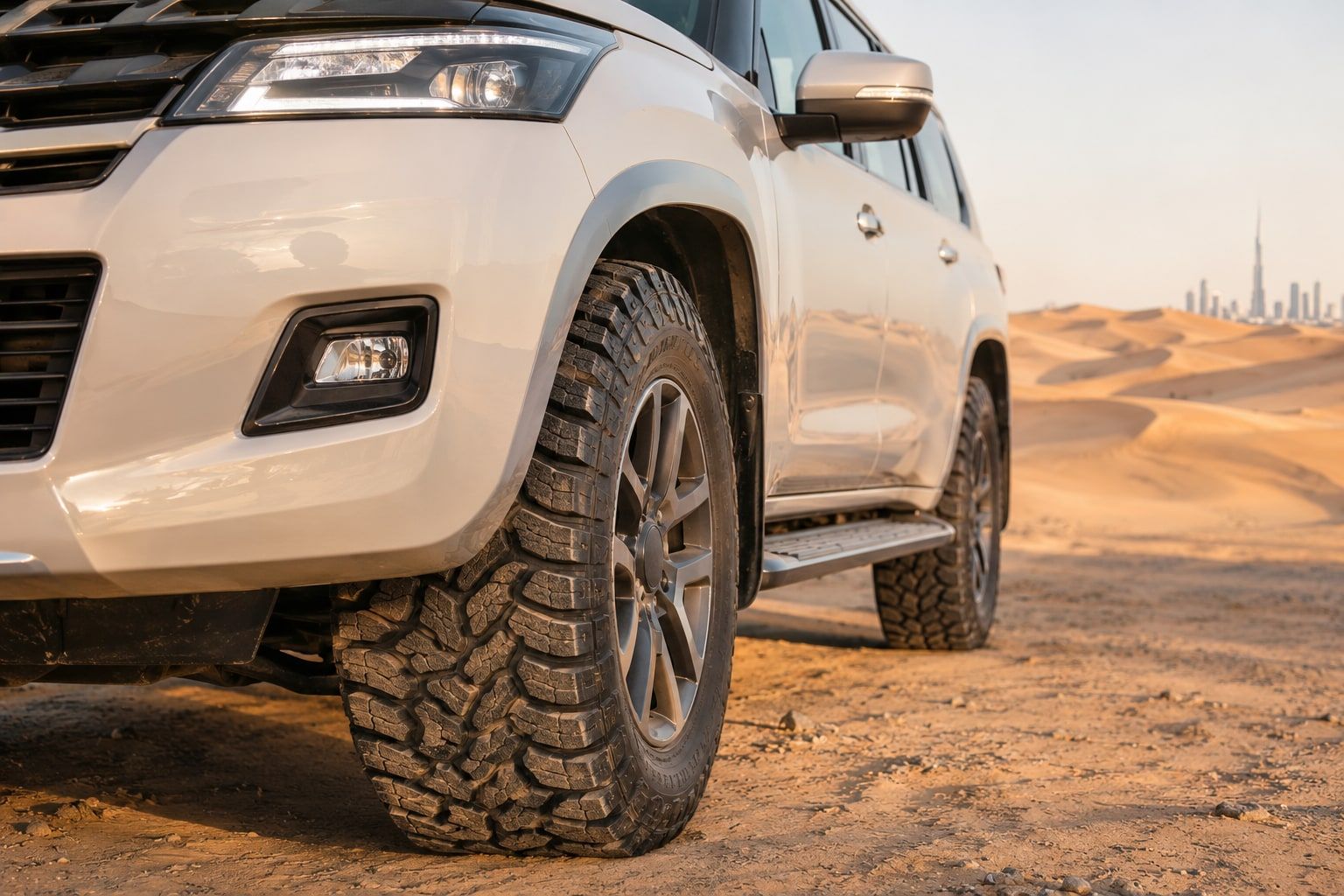
Highway-terrain (H/T) tyres are the quiet, comfortable option for SUVs and pickups that spend nearly all their time on tarmac. They are the usual factory fitment on large SUVs and work well on long motorway runs, but their shallower tread and lighter sidewalls make them the weakest choice for rocky wadis or serious dune driving.
If your Land Cruiser or Patrol does the school run all week and a graded camping track twice a year, H/T is probably right. If you head into Al Qudra or Liwa sand most weekends, read the all-terrain comparison first.
What highway-terrain (h/t) tyres suit
- Large SUVs used mainly for commuting and family trips
- Pickups that carry loads on paved roads
- Owners who want the quietest cabin a body-on-frame SUV can offer
- Occasional, gentle desert or gravel use at lowered pressure
Closest alternatives
- All-terrain (A/T) tyres: A/T tyres add sand and gravel traction and tougher sidewalls but are noisier on the road.
- Touring tyres: Touring tyres suit car-based crossovers; H/T patterns are built for heavier SUV loads.
- Mud-terrain (M/T) tyres: M/T tyres are far more capable off-road and far louder and faster-wearing on tarmac.
Why do most big SUVs leave the factory on H/T tyres?
Car makers fit H/T tyres because most SUV mileage is on paved roads, where a closed-shoulder, highway-oriented pattern is quieter and more stable. The Tire Rack buyers guide describes the highway category as built for a smooth ride, highway stability and long-distance comfort.
That suits the reality of a Prado or Tahoe in Dubai: long, hot, straight roads, heavy family loads and speed bumps in every compound. An H/T pattern also tends to have lower rolling resistance than an aggressive tread, which helps on fuel.
- For example the Bridgestone Dueler H/T range, a common factory fitment
- For example the Yokohama Geolandar H/T G056
- For example the Michelin Primacy SUV+
H/T or A/T: what changes when you switch?
Highway-terrain (H/T)
- Quieter cabin at motorway speed
- Smoother ride over joints
- Usually longer tread life on tarmac
- Limited bite in soft sand and on rock
All-terrain (A/T)
- Deeper, more open tread
- Tougher sidewalls against stone cuts
- More hum above 100 km/h
- Better traction on gravel and sand
The deciding factor is how often, not whether, you go off tarmac. Our article on H/T vs A/T tyres works through typical UAE use, and the SUV tyre guide covers load and size questions.
Can H/T tyres handle a weekend in the dunes?
Gentle sand is possible on H/T tyres at reduced pressure, but they are not designed for it. The lighter sidewall is more exposed to cuts from rocks hidden in sand, and the shallow tread clogs and loses drive sooner than an A/T pattern.
Reinflate before the road
BFGoodrich warns against deflating without a way to reinflate, and Bridgestone says reinflating before returning to tarmac is crucial. Running low pressure at motorway speed overheats any tyre.
Before a long desert trip, our long-drive preparation guide lists what to check.
What should match on replacement H/T tyres?
- Same size as the placard, or an approved alternative
- Load index at least the maker’s figure (heavy SUVs often need 110 or higher)
- Speed rating at least the maker’s figure
- Four matching tyres on full-time 4WD
Mismatched tread depths on a full-time 4WD can strain the drivetrain, which is covered in replacing tyres on AWD and 4x4 cars. When you are ready, we handle the tyre replacement on your driveway or at the workshop.
Questions
Questions drivers ask
Are H/T tyres good for UAE highways?
Yes, they are designed for exactly that. They offer the quietest ride and steadiest motorway manners among SUV tyre types, provided the load index and pressure suit how heavily you load the car.
Do H/T tyres last longer than A/T tyres?
On paved roads they usually do, because the tread is designed for even wear on tarmac. Off-road use, heat and pressure all change the result, so compare the specific patterns.
Can I drive H/T tyres on sand?
On gentle, well-used tracks at lowered pressure, carefully. For regular dune driving an all-terrain tyre is the safer choice because of its tread depth and stronger sidewalls.
Sources