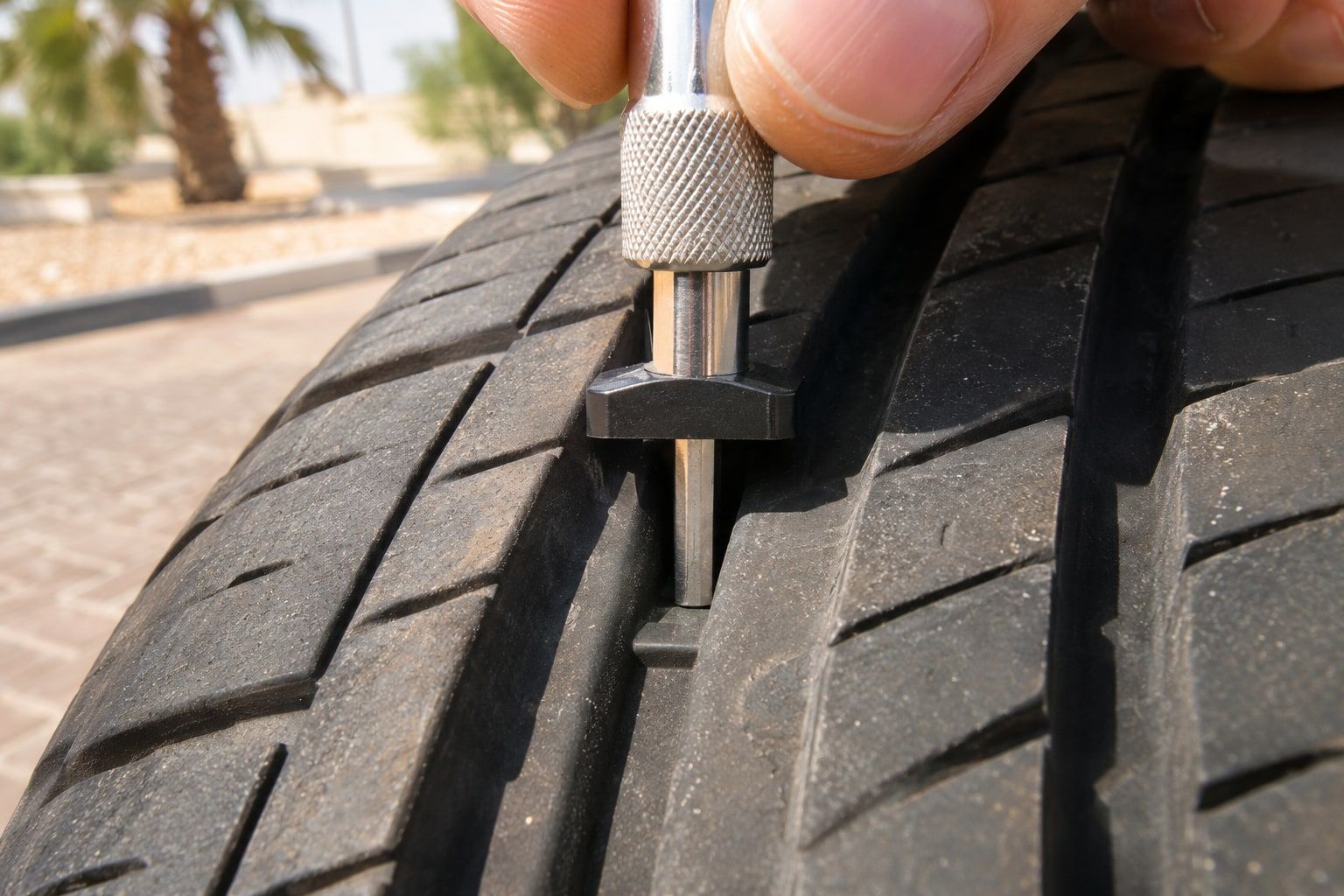
Uneven tyre wear is a symptom of something else, and the pattern on the tread points to the cause. Wear on both shoulders usually means low pressure, wear down the centre usually means too much pressure, wear on one edge points to alignment or worn suspension parts, and scalloped patches point to worn dampers or imbalance. Fix the cause before fitting new tyres, or the new ones will wear the same way.
Most drivers only notice when a fitter points it out, but the pattern is visible at home with a torch and a few minutes of looking.
How do you read the wear pattern on a tyre?
| Pattern | Usual cause | What to book |
|---|---|---|
| Both shoulders | Under-inflation | Pressure check |
| Centre strip | Over-inflation | Pressure check |
| One edge only | Camber, worn bushes | Alignment |
| Feathered ribs | Toe or caster setting | Alignment |
| Cupped patches | Worn dampers, imbalance | Balancing, suspension check |
Michelin notes that slight centre wear on rear tyres can come from how the car maker set up the suspension, so a single mild pattern is worth a check rather than an alarm. The pressure wear guide goes deeper into the first two rows.
What can you notice before the wear is obvious?
- Tread blocks that feel smooth stroked one way and sharp the other (feathering)
- A drone or hum that rises and falls with speed
- The car drifting on a straight, level road
- A steering wheel that sits slightly off-centre when driving straight
- Vibration through the steering at motorway speed
- One tyre always reading a different pressure from its partner
Bridgestone describes the saw-tooth feel across tread blocks as typical of a toe problem, and links cupping to worn shocks, struts and bushes that let the tyre bounce.
Is a tyre with uneven wear still safe?
It is safe only while the most worn part of the tread is still above the limit. Continental advises judging a tyre by the lowest depth you measure, so a tyre with a bald inner edge is worn out even if the outer ribs look healthy.
Replace now if
any groove is level with the tread wear indicators, the inner edge shows bare rubber or wire, or the cupping is deep enough to cause a constant drumming. The tread depth guide shows where to measure.
Fix the car first, then replace one tyre or a pair?
- Measure every grooveCheck inner, centre and outer grooves on each tyre so you know which are still usable.
- Correct the causeBook a wheel alignment for edge or feathered wear, wheel balancing for cupping, and have worn dampers or bushes checked by a suspension mechanic.
- Decide what to replaceReplace tyres at or near the limit, in axle pairs where the partner is also worn. The tyre replacement page lists what to confirm before ordering.
- Keep it evenRegular tyre rotation spreads normal wear once the geometry is right.
Alignment needs a level rig, so it is a workshop job at Al Quoz, Sharjah or Mussafah. Ask about collection when you book. The early warning signs are listed in alignment symptoms.
Send photos of the tread on each tyre and we will suggest alignment, balancing or replacement.
Questions
Questions drivers ask
What causes tyres to wear on the inside edge?
Inside-edge wear usually comes from too much negative camber or a toe setting that has drifted, often after a kerb or pothole strike. Worn suspension bushes can do the same, so an alignment check is the starting point.
Can rotation fix uneven wear?
Rotation spreads normal wear but does not fix a cause such as misalignment. Rotating a badly worn tyre to another corner just moves the problem, so correct the geometry first.
Do new tyres need an alignment?
It is a good idea if the old tyres wore unevenly, because otherwise the fault carries over. Continental recommends checking alignment when new tyres are fitted.
Is cupping caused by the tyre itself?
Rarely. Bridgestone links cupping mostly to worn shocks, struts or bushes and to imbalance, so those are checked before blaming the tyre.
Sources