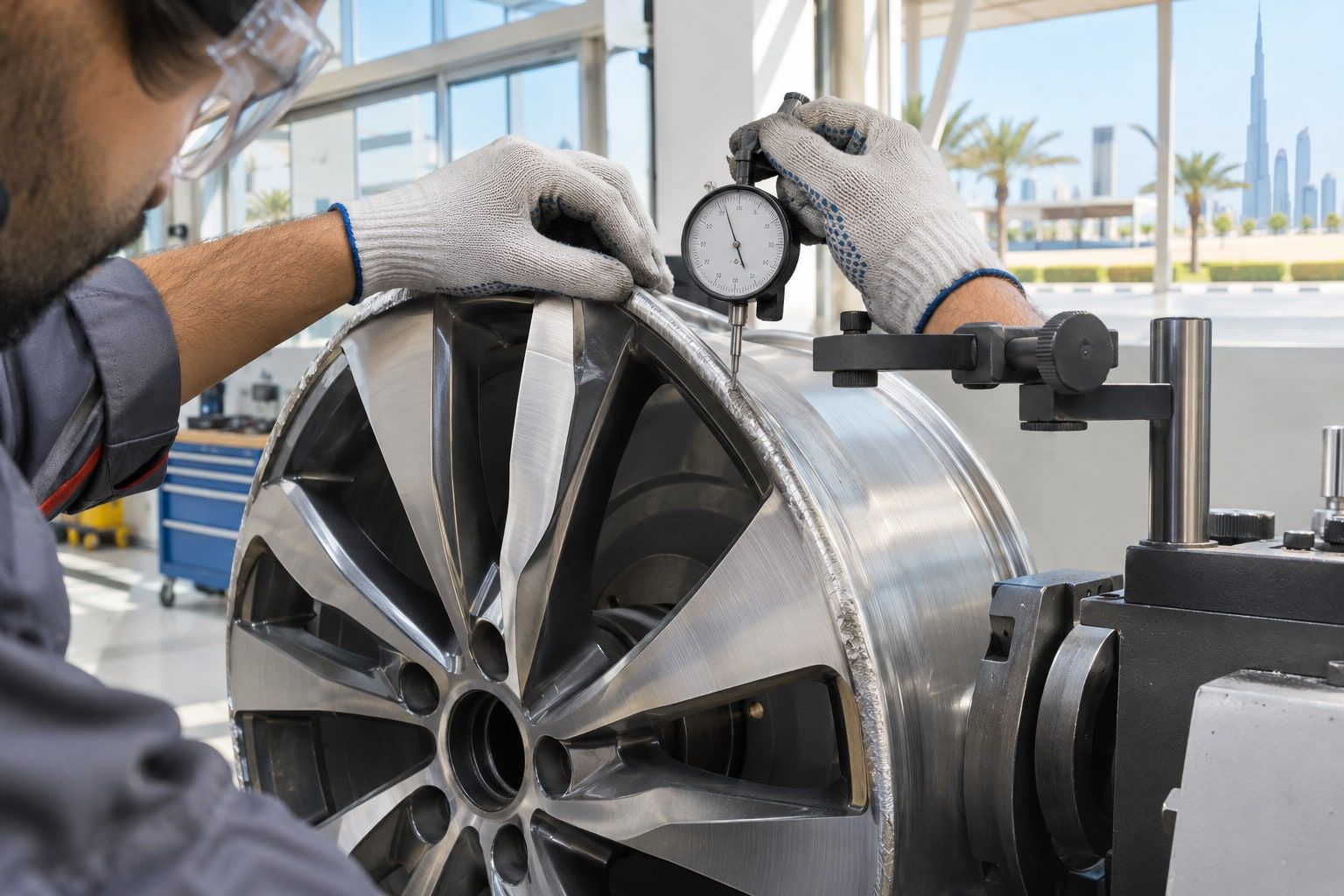
After a hard hit on a pothole, kerb or speed bump, check three things: the tyre for a bulge, cut or crack; the rim for a dent or bend; and the steering for a new pull or an off-centre wheel. A bulge or cut needs a new tyre, a bent rim can often be straightened at a workshop, and a new pull calls for an alignment check. Look again over the next few days too, because a small bulge is easy to miss the first time.
Impact damage tends to involve more than one part, which is why the order of checks below runs from tyre to wheel to steering.
What should you check straight after an impact?
- Pull over safelyStop away from traffic, not on the hard shoulder of a busy motorway if an exit is close.
- Inspect both sidewallsTurn the steering to full lock to see the inner face of the front tyres.
- Look at the rim lipCheck for a flat spot, crack or curl in the edge of the wheel.
- Check the pressureA tyre that reads low after the hit may be leaking at a bent bead seat.
- Drive slowly and feelA new vibration, pull or knock tells you which part took the impact.
Which signs point to the tyre, the wheel or the steering?
| Sign | Likely source | What to book |
|---|---|---|
| Lump on the sidewall | Broken cords | Tyre replacement |
| Cut or split near the rim | Sidewall pinched on the rim | Tyre replacement |
| Slow air loss since the hit | Bent rim lip or tyre injury | Rim or puncture inspection |
| Vibration at speed | Bent rim or lost weight | Balancing, rim check |
| Pull or off-centre wheel | Knocked alignment | Wheel alignment |
| Knock over bumps | Suspension part | Suspension mechanic |
Continental lists potholes, kerbs and minor collisions as the most frequent causes of knocked-out alignment, and says that after driving over an obstacle the tyre should be checked for cuts, cracks or bulges.
Is it safe to drive after hitting a pothole?
If the tyre holds pressure, shows no bulge or cut, and the car drives straight without vibration, you can carry on and recheck the tyre later. Any visible tyre damage or a sudden change in how the car steers means stopping and swapping to the spare.
Do not continue if
the tyre is losing air, there is a lump or a split, the rim is cracked, or the steering pulls hard. Book flat tyre assistance if changing the wheel at the roadside is not safe.
When is a professional inspection worth booking?
Book an inspection after
any impact hard enough to jolt the steering wheel, a hit that left a mark on the rim, or a new vibration. Damage to the tyre casing and the wheel can both hide on the inner face.
Wheel alignment and rim straightening are workshop jobs because they need a level rig, a lathe and a paint booth. Tyre swaps and wheel balancing can be done by a mobile technician; ask about collection if the car has to go to a workshop.
Repair the rim, replace the tyre, or check the alignment?
Rim repair
- Dented or curled rim lip
- Air loss at the bead
- Cosmetic kerb rash
Tyre replacement
- Bulge, cut or split
- Damage at the shoulder
- Tyre driven flat after the hit
Alignment
- Car pulls since the impact
- Steering wheel off-centre
- New one-edge wear
Book rim repair for a bent or scraped wheel, tyre replacement for a damaged tyre, and wheel alignment if the steering has changed. Low-profile tyres on large wheels take impacts more directly, and the profile and wheel size trade-offs are worth reading before you replace like for like.
Send photos of the tyre and rim after the impact and we will tell you what needs fixing.
Questions
Questions drivers ask
Can a pothole damage a tyre without a visible mark?
Yes. The inner face of the tyre or rim can take the hit, so check behind the wheel with the steering turned. If anything feels different afterwards, have the wheel inspected.
Does hitting a kerb affect wheel alignment?
It can. Continental names kerbs and potholes as the most frequent causes of alignment going out, so a new pull or off-centre steering wheel after a hit needs an alignment check.
Can a bent alloy rim be straightened?
Many dents and curled lips can be straightened on a lathe at the workshop. A cracked rim is a different case and is assessed by the technician before any work.
Should I replace both tyres after one is damaged by a pothole?
Only if the other tyre on that axle is worn or a matching model is unavailable. Otherwise one matched tyre is normally enough.
Sources