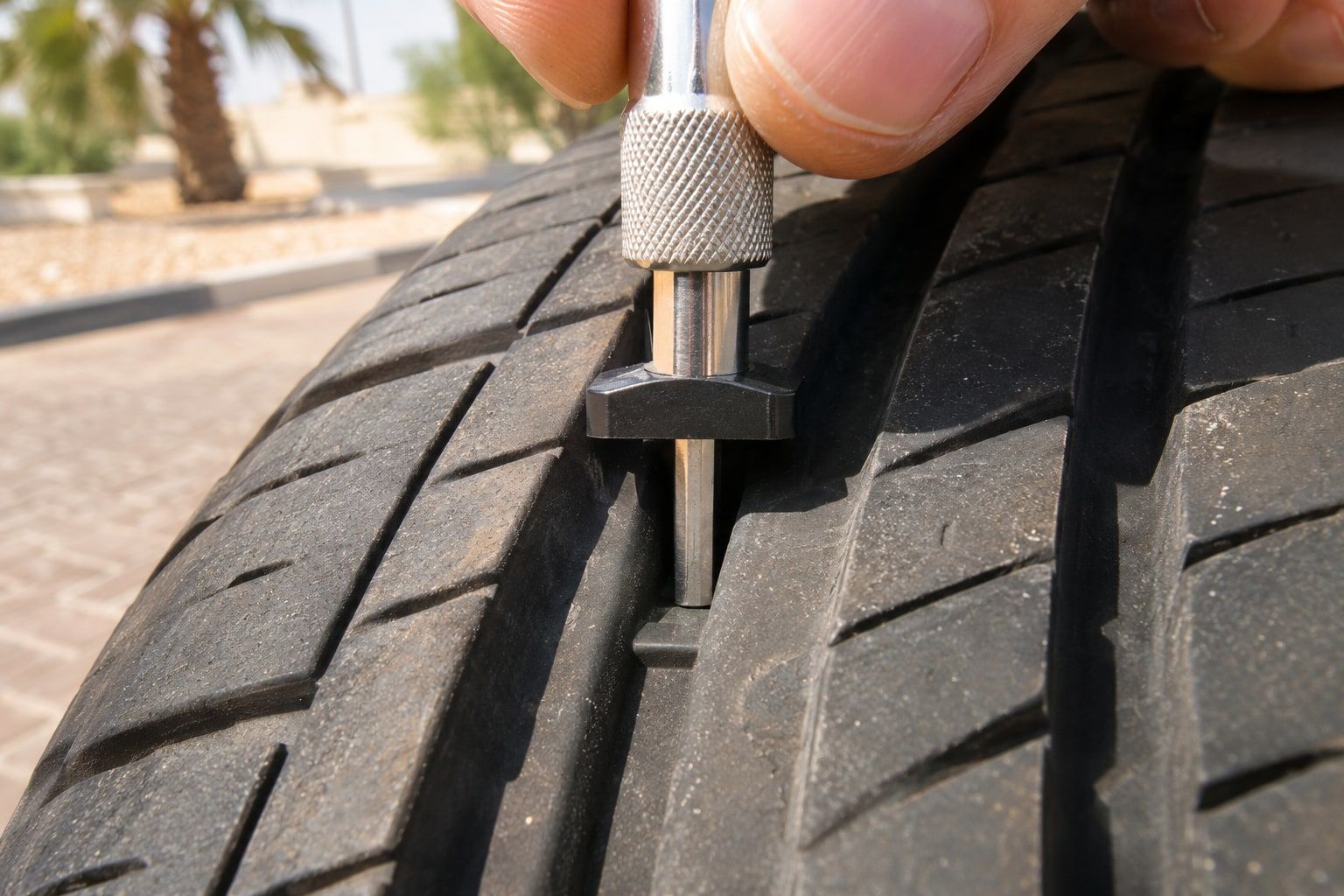
Good tyre care comes down to four habits: check tread depth and pressure regularly, rotate the tyres on schedule, watch for signs the alignment is out, and inspect the tyres before a long drive. Each guide below shows how to do one of these yourself and when to hand it to a technician.
- Checking tread depthThe 1.6 mm legal minimum, why many experts advise replacing at 3 mm, and how to measure tread properly.
- Tyre rotation at home and in the workshopRotation patterns by drive type, how often to rotate, and when directional or staggered tyres cannot move.
- Alignment symptoms to watch forA pull, an off-centre steering wheel and one-edge tyre wear are the classic signs your alignment is out.
- Preparing tyres for a long UAE driveTyre checks before Abu Dhabi, Al Ain, Fujairah, Hatta or Oman runs: pressure, load, spare and sand.
Which checks matter most in UAE heat?
Pressure matters most, because heat and long motorway runs punish an underinflated tyre. Check it cold against the placard using the tyre pressure guide, then check tread depth every month or two.
Before a long trip on the E11 or the Dubai–Al Ain road, run through preparing tyres for a long drive. If the car pulls, read alignment symptoms and book wheel alignment.
Questions
Questions drivers ask
How often should I rotate my tyres?
Follow the interval in your owner’s manual, which is commonly given in kilometres. The rotation guide shows the patterns for each drivetrain.
Should I check pressure hot or cold?
Cold, before driving or after the car has been parked in shade for a while. Placard pressures are cold figures.
Can I do tyre care myself?
Pressure and tread checks are easy at home. Rotation, balancing and alignment are better done with proper equipment.