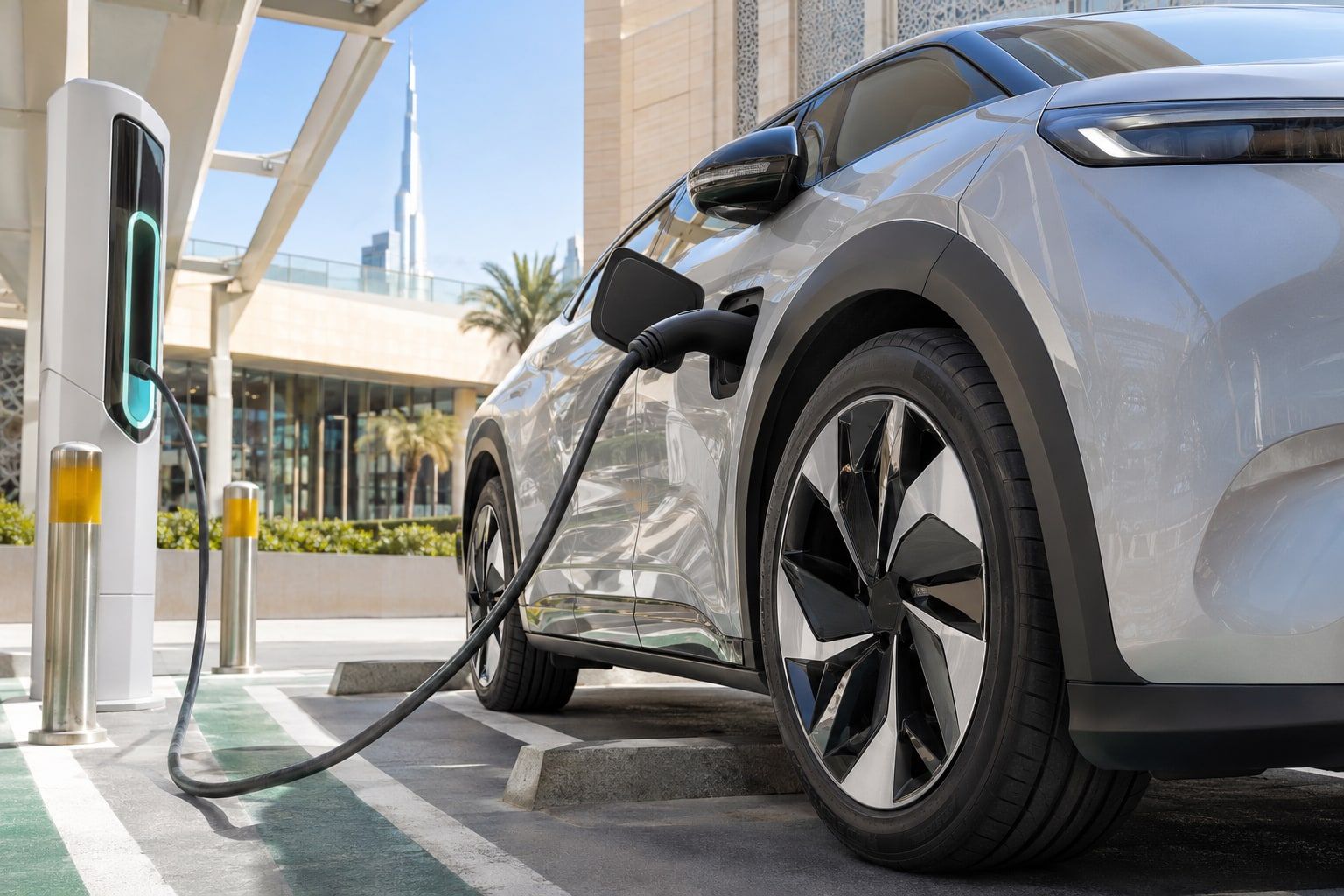
Electric cars do not need EV-branded tyres, but they do need tyres with the right load index for a heavy battery, and they benefit from low rolling resistance and low noise. Continental says its regular range already suits EVs and Michelin says all of its car tyres are suitable for electric cars; what matters is the size, load and speed rating on the placard and any car-maker marking.
This post explains what an EV asks of its tyres, why load index matters more, how tyres affect range, and what Tesla, BYD and other EV owners should check when replacing them.
What do EVs ask of a tyre that petrol cars do not?
EVs ask more of a tyre in three ways: weight, torque and quietness. Continental notes that heavy batteries place extra strain on tyres, that instant torque adds more, and that with no engine noise the tyre becomes much more audible in the cabin.
The effect on wear depends on the car. Continental reports tests in which two-wheel-drive EVs cut tyre mileage by about a quarter compared with like-for-like combustion cars, while four-wheel-drive EVs saw tyres last about 10 percent longer. Driving style still dominates: hard launches from the lights wear any tyre quickly.
Why does load index matter more on an EV?
Load index matters more because many EVs weigh far more than a petrol car of the same size. A tyre that would be fine on a petrol crossover can be under-rated for its electric twin.
Continental introduced an HL (high load) code for heavier electric and hybrid cars. In its 245/40 R19 example, the standard tyre is rated 94, the XL version 98 and the HL version 101, and Continental says HL is typically at least three load indexes above XL. Some EVs only need XL, others need HL, so the door placard decides.
Read the placard rather than the old tyre’s sidewall, in case an earlier replacement was under-rated. A common case is a used EV that arrives on standard-load tyres where the placard asks for XL; the car drives normally, but the tyres are working outside their rating.
Never fit a tyre below the load index on an EV’s placard, even if the size matches. The car is heavier than it looks.
How much do tyres affect an EV’s range?
Tyres affect range noticeably, mainly through rolling resistance. Continental says low rolling resistance tyres can extend an EV’s range by up to 12 percent, and that an A-rated tyre can add around 50 km per charge over a C-rated one on longer-range cars.
| Tyre factor | Effect on an EV |
|---|---|
| Rolling resistance class | Range per charge |
| Load index | Safe support of battery weight |
| Noise figure and foam | Cabin quietness |
| Compound and pattern | Wear rate under instant torque |
The EU tyre label rates rolling resistance from A to E, and the European Commission notes that the class difference can mean tens of kilometres of range per charge on a battery car. Pressure matters too: keep tyres at the placard figure, checked cold, using our tyre pressure guide.
A common case is an owner who notices range falling after a tyre change and assumes the battery is ageing, when the new tyres simply carry a weaker rolling resistance class than the originals. Asking for the label class before you buy avoids that surprise.
Do EV tyres need foam for noise?
Foam is not required, but it is the single biggest help if cabin hum bothers you. Without engine sound, tyre cavity noise is easy to hear, which is why many EV-focused tyres have a foam liner bonded inside the tread.
Michelin describes its Acoustic foam ring as addressing a major issue for electric cars, and Continental fits ContiSilent foam to some sizes. If your EV came on foam-lined tyres, a replacement without foam can sound louder even in the same pattern, so ask for the foam version where it exists. Our post on quiet tyres for motorway driving covers how to compare noise figures.
What should Tesla and BYD owners check when replacing tyres?
- Size, load index and speed rating from the door placard
- XL or HL marking if the original tyres carried one
- Whether the original tyres were foam-lined
- Any car-maker approval code moulded on the original sidewall
- Front and rear sizes on dual-motor performance trims
- Even wear across the tread, checked at every service
A common case is a Tesla Model Y owner whose rear tyres wear out well ahead of the fronts. Regular tyre rotation, where the sizes allow it, spreads that wear and keeps all four replacing together. Fitment notes for each model are on our Tesla and BYD guides.
Our verdict on EV tyres
Buy on specification, not on a label. A tyre that meets the placard load index, carries a good rolling resistance class and has a low noise figure is a good EV tyre, whether or not the sidewall says EV.
EV-specific ranges bundle those qualities, which saves you comparing, but they are not mandatory. Compare options on our EV tyres guide and EV-specific tyres page, then send us your car and size.
After fitting, the technician confirms that the tyre pressure sensors read correctly, since EVs rely on them for pressure warnings and many show each tyre’s pressure on the screen.
Send your EV model and tyre size and we will quote options with the right load index and low rolling resistance.
Questions
Questions drivers ask
Does an EV car have different tyres?
Many EVs leave the factory on tyres tuned for low rolling resistance, low noise and high load, but they use standard sizes. Any tyre that meets the placard size, load index and speed rating can legally be fitted.
Can I put normal tyres on a Tesla?
Yes, if they match the placard size, load index and speed rating, including XL or HL where specified. Expect possible changes in range and cabin noise if the replacement has higher rolling resistance or no foam liner.
Do EV tyres wear out faster?
Often, on two-wheel-drive EVs: Continental reports tests showing tyre mileage cut by about a quarter. Heavy weight and instant torque are the reasons. Smooth driving, correct pressures and rotation help.
What does HL mean on an EV tyre?
HL stands for high load. It is a reinforced construction that carries more weight than an XL tyre of the same size, introduced for heavier electric and hybrid cars. Fit HL if your placard asks for it.
Sources